
Face Shape Guides
7 Best Haircuts for Round Faces and How to Adapt Them
Compare seven adaptable haircuts for round faces by length, texture, routine, emphasis, and styling tradeoffs.
 Hair Fairy Editorial7 min read
A shoulder-length lob is the strongest overall starting point for a round face because its length and outline are easy to adapt across textures and routines. Long face-framing layers and a butterfly cut offer more movement, while bobs, shags, pixies, and side-swept medium cuts create different kinds of emphasis.
Key Takeaways
- The best option depends on what you want to emphasize; a round face does not need to be hidden, corrected, or made to resemble another shape.
- Length, volume placement, parting, texture, and face-framing details matter more than the haircut name alone.
- Compare finalists using your own texture and routine, then ask a hairstylist how to adapt the silhouette.
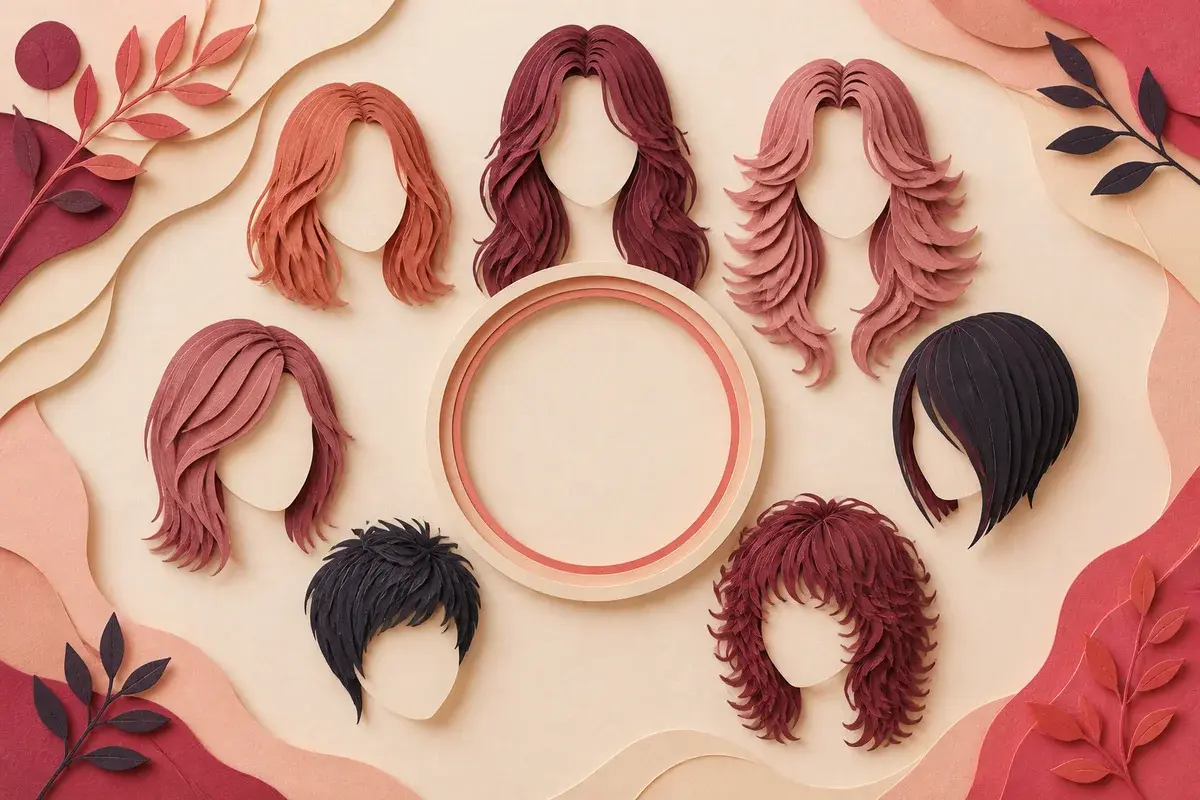
A round face is commonly described as having soft curves with similar visible width and length, but people rarely fit a diagram perfectly. Use this guide to explore lines and volume placement—not to conceal or “fix” your face.
L’Oréal Paris’s round-face guide notes that texture and personal preference affect the choice and says there is no single best style. Vogue India’s expert roundup also presents adaptable directions rather than one mandatory cut.
How we ranked the options
The ranking weighs five practical criteria: adaptability across textures, range of length choices, control over where volume sits, daily styling burden, and how clearly the cut can be adjusted in consultation. Higher rank means a broader starting point, not greater beauty.
Overview of the seven haircuts
| Rank | Haircut | Main visual effect | Key tradeoff |
|---|---|---|---|
| 1 | Shoulder-length lob | Clear vertical line with flexible framing | May need styling to keep a specific finish |
| 2 | Long face-framing layers | Movement without losing overall length | Subtle layers can disappear on some textures |
| 3 | Butterfly cut | Airy face framing and crown movement | Usually depends on styling for its signature shape |
| 4 | Angled or side-parted bob | Strong outline and asymmetrical emphasis | Precision and parting affect upkeep |
| 5 | Curly shag | Texture-led volume and visible layering | Shape varies with shrinkage and density |
| 6 | Textured pixie | Open face and compact silhouette | Short length makes grow-out and reshaping visible |
| 7 | Side-swept medium cut | Directional movement with moderate commitment | A natural part may resist the sweep |
1. Shoulder-length lob
Who it suits: Someone who wants a noticeable change while retaining moderate length and styling flexibility.
Why it ranks: The shoulder-length lob can be blunt, softly layered, wavy, curly, or side-parted, making it the broadest starting point.
Main benefit: Its perimeter can sit below the widest part of the face while framing remains adjustable.
Limitation: A highly polished lob may require deliberate drying or heat styling depending on texture.
How to adapt it: Choose collarbone or shoulder length, then decide whether you want a full perimeter, soft movement, or face-framing pieces.
2. Long face-framing layers
Who it suits: Someone who wants movement around the face without giving up long length.
Why it ranks: Long layers preserve versatility and can direct attention toward the cheekbones, jaw, or lower lengths.
Main benefit: The starting point of the framing can be personalized without changing the entire perimeter.
Limitation: Fine hair or loose styling may not display extensive layering clearly, while very dense hair needs thoughtful weight distribution.
How to adapt it: Tell your stylist where you want the shortest visible piece and how you normally wear your part.
3. Butterfly cut
Who it suits: Someone who likes long hair with shorter, sweeping layers and visible movement near the face.
Why it ranks: The butterfly cut offers dramatic framing while keeping longer lengths beneath it.
Main benefit: It creates two readable zones—shorter movement around the face and longer length below.
Limitation: The signature airy finish may look different when air-dried or on tighter textures.
How to adapt it: Bring references showing both styled and more natural versions, and discuss how much daily lift you will create.
4. Angled or side-parted bob
Who it suits: Someone who wants a graphic shorter outline or directional asymmetry.
Why it ranks: A blunt bob can be adjusted through length, angle, part, and texture rather than following one fixed geometry.
Main benefit: A side part or subtle angle creates a strong visual direction.
Limitation: A precise outline shows grow-out, and chin placement can emphasize the face’s width if that is not your preferred effect.
How to adapt it: Compare chin, jaw, and below-jaw lengths, then choose the one whose emphasis you actually enjoy.
5. Curly shag
Who it suits: Someone who wants curls or waves to drive the silhouette, with visible layers and crown movement.
Why it ranks: The curly shag works with texture rather than requiring a smooth outline.
Main benefit: Layered movement can place volume above, beside, or below the cheek area according to the chosen shape.
Limitation: Curl pattern, density, and shrinkage make the final outline less predictable from a straight-haired reference.
How to adapt it: Use references with a related texture and discuss dry length, fringe behavior, and volume placement.
6. Textured pixie
Who it suits: Someone ready for short length who likes an open face and visible top texture.
Why it ranks: A pixie cut challenges the assumption that round faces require long hair.
Main benefit: Length and movement on top can create a compact, directional shape with minimal perimeter weight.
Limitation: Frequent shape changes become visible during grow-out, and short sections may require daily resetting.
How to adapt it: Compare side length, fringe direction, and top texture; ask how your growth patterns will influence each area.
7. Side-swept medium cut
Who it suits: Someone who wants asymmetry without committing to a very short cut or extensive layers.
Why it ranks: It uses parting and front direction to alter emphasis while keeping a versatile medium length.
Main benefit: The sweep can highlight one side and add movement across the forehead.
Limitation: Cowlicks and a strong natural part can make a specific sweep harder to maintain.
How to adapt it: Test the part before cutting and choose a fringe length that works when worn both swept and relaxed.
Choose your finalists
| If your priority is… | Start with… | Compare it against… |
|---|---|---|
| Versatile medium length | Shoulder-length lob | Side-swept medium cut |
| Keeping long hair | Long face-framing layers | Butterfly cut |
| A defined short outline | Angled bob | Textured pixie |
| Making natural texture central | Curly shag | Layered lob |
| Lower styling dependence | A simple lob or long layers | More sculpted butterfly or pixie shapes |
Use the broader haircut suitability checklist to compare texture, routine, and commitment—not face shape alone.
Compare the finalists with Hair Fairy
Preview two or three finalists through the women’s hairstyle directory or use Custom Style with your own references. Hold your portrait, color, and expression steady so you are comparing the silhouette rather than multiple variables.
Hair Fairy does not detect face shape or decide which cut is best. A preview also cannot predict growth patterns, shrinkage, or salon execution.
Direct recommendation
Start with a shoulder-length lob if you need the most adaptable option. Choose long layers or a butterfly cut when retaining length matters; choose a bob, shag, pixie, or side-swept cut when its particular line matches the emphasis and routine you want.
Frequently Asked Questions
Questions about face shape and haircut choices
What haircut is best for a round face?
A shoulder-length lob is a versatile starting point, but the best choice depends on your texture, routine, preferred length, and the features you want to emphasize.
Can a round face wear a bob?
Yes. A bob can be blunt, angled, softly layered, center-parted, or side-parted. Its length and weight placement can be adapted to create the emphasis you prefer.
Do layers work with a round face?
Yes. Long or face-framing layers can add movement and guide attention, but their starting point and weight should be adapted to your texture and density.
Can short hair work with a round face?
Yes. A textured pixie or short bob can reveal the face and create a strong silhouette. The practical question is whether you like the outline and maintenance, not whether short hair is allowed.
Are bangs suitable for a round face?
Many bang shapes can work. Side-swept, curtain, airy, or textured bangs each create different lines, so choose according to your desired effect and natural growth pattern.
Can Hair Fairy detect my face shape?
No. Hair Fairy can preview haircut directions on your portrait, but it does not determine your face shape or select an objectively best haircut.
About This Guide
Hair Fairy EditorialEditorial team, Hair Fairy
Hair Fairy Editorial writes and reviews Hair Fairy guides with a focus on realistic haircut decisions, clear salon communication, and styles that work beyond the inspiration photo. The team balances visual ideas with texture, maintenance, and everyday wear.
Women’s haircut selection, face-shape and texture considerations, salon-reference planning, maintenance trade-offs, clear stylist communication, and responsible use of AI hairstyle previews as decision aids rather than guarantees.
View author profileSee us more often in Google
One click marks Hair Fairy as a preferred source, so our articles are more likely to appear in your Top Stories, and can show a preferred badge in AI Mode and AI Overviews.
Compare Your Idea
Preview a hairstyle on your own photo.
Use a reference, a written description, or both—then discuss the practical result with your stylist.