
Hair Type Guides
7 Best Haircuts for Fine Hair for a Fuller-Looking Shape
Compare seven haircuts for fine strands, including bobs, lobs, pixies, light layers, and longer cuts with a visually full perimeter.
 Hair Fairy Editorial7 min read
A blunt bob is the strongest overall haircut for fine hair when the goal is a fuller-looking outline because it concentrates visual weight at one perimeter. A shoulder-length lob and one-length medium cut preserve more length, while pixies, a bixie, restrained framing, and a long full-perimeter cut suit different routines.
Key Takeaways
- Fine hair describes individual strand diameter; it is not the same as low density, thinning, or hair loss.
- Strong perimeters often look visually substantial, while extensive short layering can make the ends appear lighter.
- The best length is the one that balances the outline you want with your texture, density, styling routine, and tie-back needs.
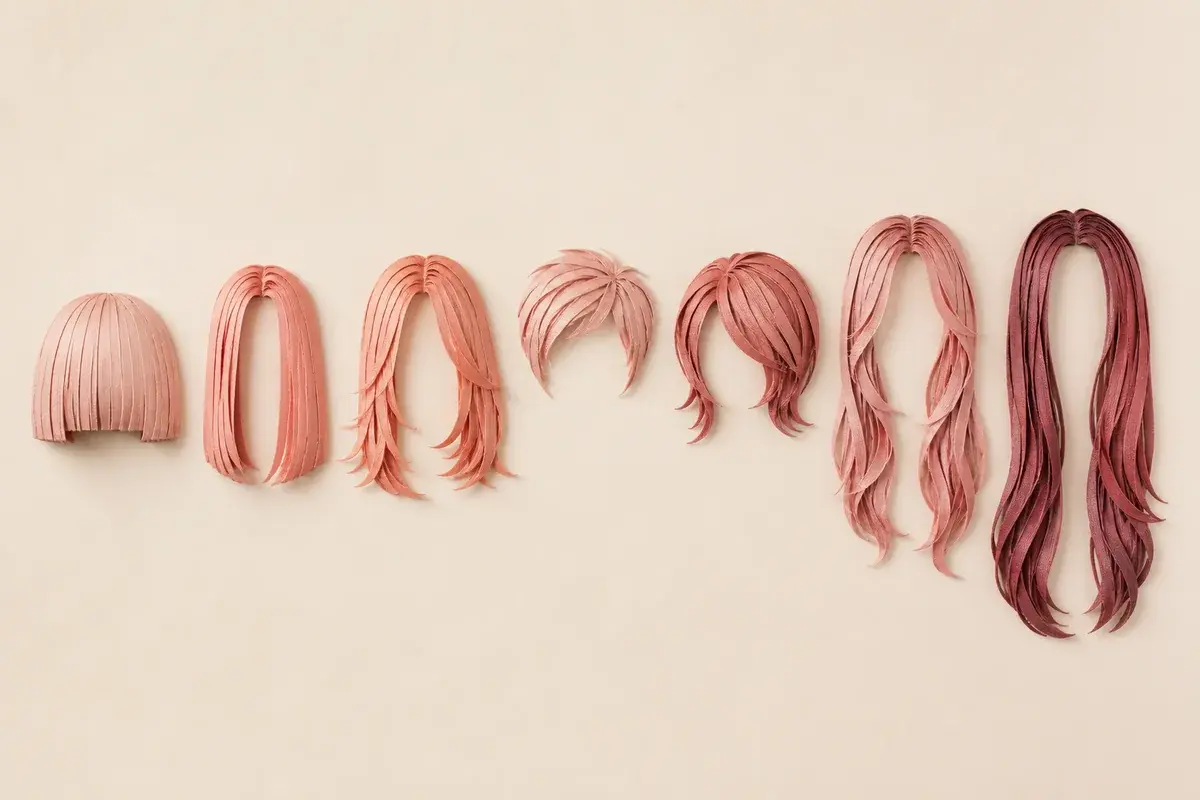
The most useful decision for fine hair is often where to preserve visible weight. That may mean a strong perimeter, restrained layering, or a shorter shape that does not ask the ends to carry as much length.
Fine hair versus low density or thinning
Fine hair refers to the diameter of an individual strand. You can have many fine strands and substantial density, or fine strands with lower density. “Thin hair” is used inconsistently, and medically relevant thinning or sudden shedding is a separate concern. The strand-thickness and density guide explains how to estimate the two dimensions separately.
Healthline’s overview explicitly distinguishes fine hair from thin hair. Editorial roundups from Vogue and Allure show why strong bobs and strategic layers are recurring options, but your condition, density, and routine still determine the adaptation.
How we ranked the options
We ranked these cuts by perimeter strength, control over layer weight, adaptability across density and texture, daily styling burden, grow-out, and length flexibility. “Fuller-looking” describes a visual outline, not a change in biological density.
Overview of the seven haircuts
| Rank | Haircut | Main benefit | Main tradeoff |
|---|---|---|---|
| 1 | Blunt bob | Concentrated visual weight at one edge | Precise perimeter can show grow-out |
| 2 | Shoulder-length lob | Strong outline with more versatility | Ends may need care and intentional styling |
| 3 | One-length medium cut | Preserves a substantial perimeter | Less built-in movement |
| 4 | Soft pixie | Compact shape without long, light ends | Short sections need reshaping and daily reset |
| 5 | Bixie | Texture and short-to-medium flexibility | Layer balance is especially important |
| 6 | Light face-framing layers | Adds movement without layering everything | Framing can become too sparse if overdone |
| 7 | Long full-perimeter cut | Retains length and visual weight at the ends | Long length may expose fragile or uneven ends |
1. Blunt bob
Who it suits: Someone who wants a compact, graphic shape and does not need long tie-back length.
Why it ranks: A blunt bob places the visible ends on a clear line, which can make the outline appear more substantial.
Main benefit: Minimal layering keeps more visual weight at the perimeter.
Limitation: A precise line can reveal grow-out and may need styling to sit as intended on wavy or irregular textures.
How to adapt it: Compare jaw, chin, and below-chin lengths; ask whether a truly blunt or subtly softened edge better fits your natural movement.
2. Shoulder-length lob
Who it suits: Someone who wants a strong perimeter while preserving more styling and tie-back options.
Why it ranks: A shoulder-length lob extends the blunt-cut principle into a more flexible length.
Main benefit: It can look visually grounded without committing to a short bob.
Limitation: Contact with the shoulders can make ends flip, and longer fine hair may need careful conditioning and handling.
How to adapt it: Choose the exact resting point and decide whether you want an even edge or minimal internal movement.
3. One-length medium cut
Who it suits: Someone who values a simple outline, easy tying back, and fewer short layers.
Why it ranks: It preserves the perimeter through a practical medium length without relying on a high-styling finish.
Main benefit: Most strands reach a similar endpoint, keeping the lower outline readable.
Limitation: The cut may feel flat if you want obvious movement around the face.
How to adapt it: Use parting, a gentle bend, or a small amount of face framing rather than extensive all-over layering.
4. Soft pixie
Who it suits: Someone comfortable with short hair who wants a light, compact shape around the head.
Why it ranks: A pixie cut removes the problem of long, tapered ends and allows texture to be concentrated in shorter sections.
Main benefit: The silhouette can appear intentional without preserving a long perimeter.
Limitation: It cannot be tied back, and growth patterns become more visible at short lengths.
How to adapt it: Discuss fringe, side length, crown movement, and how much daily styling your natural texture needs.
5. Bixie
Who it suits: Someone interested in a shape between a bob and pixie, with more softness around the ears and nape.
Why it ranks: A bixie provides short-hair lift while retaining enough length for a layered outline.
Main benefit: It offers more movement than a blunt bob and less commitment than a close pixie.
Limitation: Too many short layers can separate into sparse-looking ends on some fine hair.
How to adapt it: Keep a clear visual anchor at the nape or sides and ask the stylist to balance movement with perimeter strength.
6. Light face-framing layers
Who it suits: Someone keeping medium or long hair who wants movement near the face without losing weight everywhere.
Why it ranks: Restricting long layers to the front can change the silhouette while preserving the back perimeter.
Main benefit: It creates visible direction without turning the whole haircut into layers.
Limitation: Very short or numerous front pieces can appear light and require styling to blend.
How to adapt it: Set the shortest point deliberately and keep the rest of the perimeter comparatively full.
7. Long cut with a full perimeter
Who it suits: Someone whose priority is long hair and whose ends can support the chosen length.
Why it ranks: Fine hair does not have to be short; a clean lower edge can preserve a visually substantial outline.
Main benefit: It keeps length while avoiding the most weight-removing layer patterns.
Limitation: Damage, breakage, or naturally lower density at the ends may become more visible as length increases.
How to adapt it: Choose the longest point where the perimeter still looks and feels healthy to you, then keep layers restrained.
Choose your finalists
| Your priority | First finalist | Second finalist |
|---|---|---|
| Strongest short perimeter | Blunt bob | Soft pixie |
| Tie-back flexibility | Shoulder-length lob | One-length medium cut |
| Visible movement | Bixie | Light face-framing layers |
| Keeping long length | Long full-perimeter cut | Face-framed medium or long cut |
| Minimal reliance on layers | Blunt bob | One-length medium cut |
Before choosing, apply the broader four haircut checks to your routine and commitment.
Compare length and perimeter with Hair Fairy
Use the women’s hairstyle directory or Custom Style after narrowing your options. Keep the portrait and color steady while you compare lengths and perimeter shapes.
The preview cannot measure strand diameter, density, breakage, or health. It also cannot show exactly how fine hair will move after cutting, so use it to prepare questions for your hairstylist.
Direct recommendation
Choose a blunt bob when a strong short outline is the priority. Choose a lob or one-length medium cut for more flexibility, and use pixie, bixie, light framing, or long full-perimeter options when their specific tradeoffs better fit your routine and length goals.
Frequently Asked Questions
Questions about hair type and haircut choices
What haircut is best for fine hair?
A blunt bob is a strong starting point for a visually full perimeter, but a lob or one-length medium cut may be better if you want more length or tie-back flexibility.
Is fine hair the same as thin hair?
Not exactly. Fine describes the diameter of individual strands. Thin may refer to lower overall density or thinning, so clarify which characteristic you mean during consultation.
Should fine hair have layers?
Fine hair can have layers, but their amount and placement matter. Light face framing may add movement while preserving a stronger perimeter; extensive short layers can make some outlines look lighter.
Does short hair make fine hair look thicker?
A shorter perimeter can create a fuller-looking shape on some hair, but a haircut does not change biological strand thickness or density.
Can fine hair be worn long?
Yes. A long cut with a full perimeter and restrained layering can preserve length while keeping the ends visually substantial, depending on condition and density.
When should I seek help for hair thinning?
A haircut can change visual shape but cannot diagnose or treat hair loss. If you notice sudden shedding, patchiness, or a health-related change, consult an appropriate healthcare professional.
About This Guide
Hair Fairy EditorialEditorial team, Hair Fairy
Hair Fairy Editorial writes and reviews Hair Fairy guides with a focus on realistic haircut decisions, clear salon communication, and styles that work beyond the inspiration photo. The team balances visual ideas with texture, maintenance, and everyday wear.
Women’s haircut selection, face-shape and texture considerations, salon-reference planning, maintenance trade-offs, clear stylist communication, and responsible use of AI hairstyle previews as decision aids rather than guarantees.
View author profileSee us more often in Google
One click marks Hair Fairy as a preferred source, so our articles are more likely to appear in your Top Stories, and can show a preferred badge in AI Mode and AI Overviews.
Compare Your Idea
Preview a hairstyle on your own photo.
Use a reference, a written description, or both—then discuss the practical result with your stylist.