
Hair Type Guides
7 Best Haircuts for Wavy Hair, From Defined to Relaxed
Compare seven haircuts for wavy hair by pattern visibility, density, length, styling routine, perimeter, and grow-out.
 Diane Bennett9 min read
A shoulder-length lob with light, adaptable layering is the strongest overall haircut for wavy hair because it gives the pattern room to bend while retaining a clear perimeter and useful styling flexibility. Long blended layers preserve more length, while shaggy bobs, classic shags, blunt bobs, pixies, and long full-perimeter cuts suit different balances of definition, volume, routine, and commitment.
Key Takeaways
- Choose by how your waves behave after your normal drying method, not by a curl-type label alone.
- Layer amount and perimeter weight should be considered together because either can change where the silhouette looks full or light.
- Compare the intended cut in both a natural finish and your usual styled finish, then confirm the dry endpoint with a hairstylist.
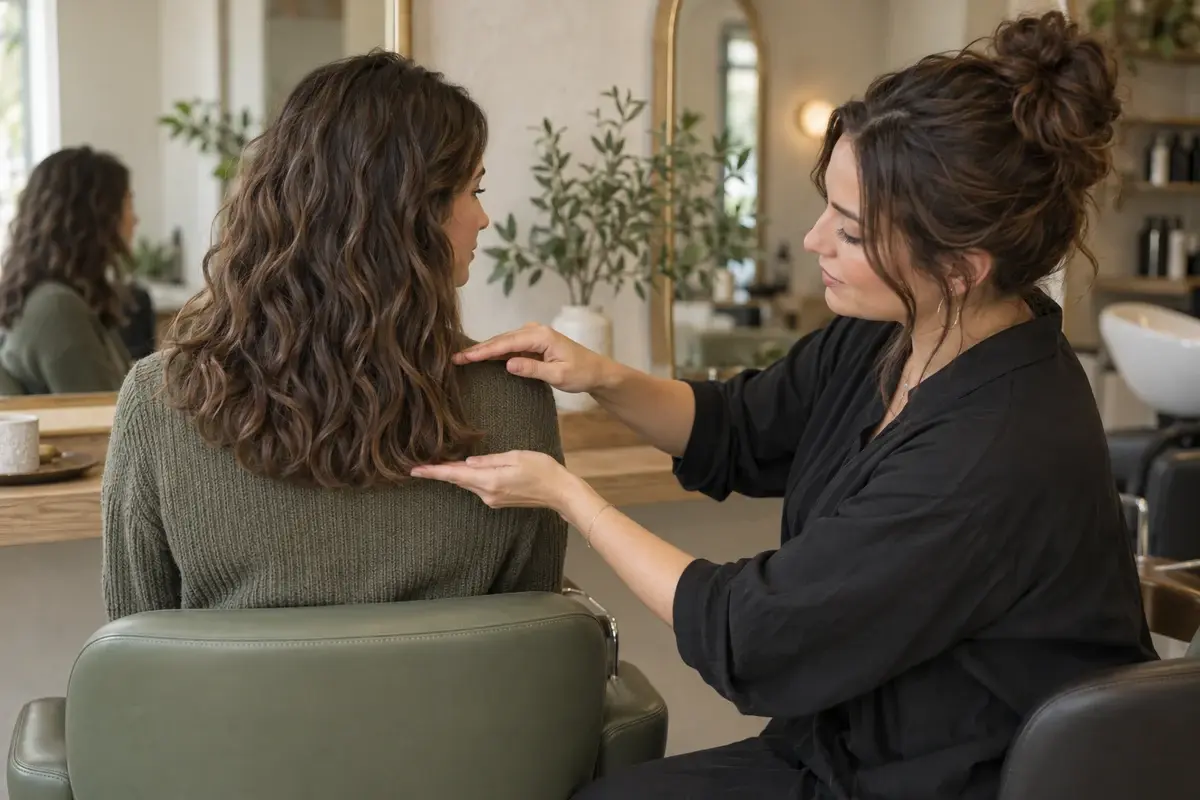
The best haircut for wavy hair is not the one that forces every section into the same curl category. It is the one that gives your usual pattern a useful outline while respecting density, length, drying method, and the amount of variation across your head.
Start with how your waves actually behave
Observe your hair after the drying method you use most often. Note where the first visible bend begins, whether the underneath is straighter or curlier than the surface, where volume gathers, and whether the ends form waves or fall relatively straight.
Wavy hair is a form of curved hair, but the curve can be long and shallow or shorter and deeper. A recent micro-CT study describes wavy fibres as bending back and forth, with variation in wave depth and spacing; it also notes that overall hair shape reflects inherent curvature, elasticity, and fibre weight (International Journal of Cosmetic Science). That is why one “wavy” label cannot select a haircut by itself.
Separate strand diameter from overall density using the four-check hair assessment. Also record your normal part, crown behavior, humidity response, and how often you enhance, stretch, or straighten the wave.
How we ranked the options
This ranking favors cuts that provide a clear shape while remaining adaptable across loose and stronger wave patterns. The criteria are:
- ability to show natural movement without depending on one polished finish
- control over perimeter fullness and visible weight distribution
- adaptability across density and strand diameter
- flexibility for air-drying, diffusing, blow-drying, or occasional heat styling
- tie-back, grow-out, and salon-upkeep tradeoffs
- ease of explaining the intended dry silhouette to a hairstylist
The ranking is a starting point, not a rule. Cutting method and layer placement should be chosen by the hairstylist after seeing how your hair behaves.
Overview of the seven haircuts
| Rank | Haircut | Main benefit | Main tradeoff |
|---|---|---|---|
| 1 | Shoulder-length wavy lob | Balanced movement, perimeter, and flexibility | Shoulder contact can make ends turn unpredictably |
| 2 | Long blended layers | Preserves length while revealing movement | Too many short layers can lighten the lower outline |
| 3 | Shaggy bob | Makes irregular texture part of the design | More visible separation and less tie-back range |
| 4 | Classic shag | Strong crown movement and layered texture | Requires commitment to a deliberately broken outline |
| 5 | Blunt wavy bob | Clear, dense-looking perimeter | Dense hair may expand strongly near the baseline |
| 6 | Wavy pixie | Exposes texture with minimal length | Growth patterns and daily resetting become prominent |
| 7 | Long full-perimeter cut | Retains maximum lower fullness | Weight can stretch subtler waves |
1. Shoulder-length wavy lob
Who it suits: Someone who wants visible movement, a recognizable outline, and the option to tuck or tie some of the hair back.
Why it ranks: The shoulder-length lob provides enough length for waves to form while keeping the overall shape easy to read. Light internal or surface layering can be adjusted without changing the basic silhouette.
Main benefit: It bridges shorter and longer hair, so it is useful when you are unsure how much length to remove.
Limitation: Ends that meet the shoulders may flip, compress, or widen differently from day to day.
How to adapt it: Agree on the dry endpoint, the amount of perimeter fullness, and whether shorter pieces must still reach a ponytail.
2. Long blended layers
Who it suits: Someone who wants to preserve long hair while making wave movement easier to see.
Why it ranks: Long layers can redistribute visible weight without replacing a long silhouette with a highly textured one.
Main benefit: The length remains versatile for tying back, braiding, straightening, or wearing naturally wavy.
Limitation: Layers that begin too high or become too numerous may leave the ends looking lighter than intended, especially with fine strands or lower density.
How to adapt it: Describe the shortest acceptable layer and show how much fullness you want at the bottom when the hair is dry.
3. Shaggy bob
Who it suits: Someone who likes piece separation, an irregular perimeter, and a finish that does not need to look perfectly controlled.
Why it ranks: A shaggy bob uses shorter internal movement within a compact length, so natural bends become part of the shape.
Main benefit: Variation between straighter and wavier sections can look intentional instead of unfinished.
Limitation: The cut gives up some lower density and tie-back ability compared with a lob.
How to adapt it: Decide how much crown lift, fringe, and exposed neck you actually want; keep more perimeter weight if your ends tend to separate.
4. Classic shag
Who it suits: Someone who wants obvious crown layers, face movement, and a tapered outline rather than a smooth curtain of hair.
Why it ranks: The classic shag makes wave and layer separation central to the design. It can be adjusted from restrained to dramatic.
Main benefit: Natural texture can provide much of the visible movement.
Limitation: Short crown layers and a lighter perimeter create a specific grow-out and may require more refreshing on flatter days.
How to adapt it: Choose the shortest crown point, fringe length, and desired lower density separately.
5. Blunt wavy bob
Who it suits: Someone whose priority is a strong outline with natural bends inside it.
Why it ranks: A blunt bob provides a simple baseline that can make the ends appear substantial, particularly for fine strands.
Main benefit: The contrast between a clean perimeter and uneven natural movement is easy to describe and compare.
Limitation: High density or strong lower waves may create more width near the jaw or neck than a reference with straight hair suggests.
How to adapt it: Confirm the perimeter on dry hair and discuss whether subtle internal shaping is needed without losing the blunt visual edge.
6. Wavy pixie
Who it suits: Someone who wants a genuinely short silhouette and is comfortable exposing the ears, nape, hairline, and crown.
Why it ranks: A textured pixie can turn bends at the top into purposeful direction while keeping the sides compact.
Main benefit: Less length can mean quicker washing and drying.
Limitation: Cowlicks, sleep movement, and changes in the short outline become more visible, and tie-back is usually unavailable.
How to adapt it: Map the natural part, crown, and hairline before cutting and preserve enough top length for your preferred wave to form.
7. Long cut with a full perimeter
Who it suits: Someone who values length and dense-looking ends more than maximum wave definition.
Why it ranks: A nearly one-length outline is a useful control option when you are comparing whether layers truly improve your pattern.
Main benefit: It preserves styling range and lower fullness.
Limitation: The weight of long hair may stretch a subtle pattern, especially near the roots, and the shape can feel bottom-heavy at high density.
How to adapt it: Consider restrained face framing or an adjusted U-shaped perimeter without adding short layers throughout.
Choose your wavy-hair finalists
Reduce the list according to your first priority:
| Priority | Strong finalists |
|---|---|
| Flexible medium length | Shoulder-length lob and shaggy bob |
| Keep long hair | Long blended layers and full-perimeter cut |
| Show more texture | Classic shag and shaggy bob |
| Preserve dense-looking ends | Blunt bob and full-perimeter cut |
| Make a major short change | Wavy pixie and blunt bob |
Save two or three real-hair references for each finalist. Choose examples with a wave strength, density, and finish reasonably close to yours, then use the reference-photo guide to label what to copy and what to ignore.
If a candidate depends on frequent hot-tool refinement, count that as part of its routine. The American Academy of Dermatology advises reducing blow-drying frequency and using low or medium settings because excessive heat can damage hair (AAD).
Compare wavy silhouettes with Hair Fairy
After building the shortlist, compare it with Hair Fairy using one clear portrait. Hold color, expression, and lighting constant. Test the shoulder-length lob, shaggy bob, or classic shag, then use Custom Style to describe the wave strength and perimeter you want to preserve.
Reject a result if it changes your face, hides the outline, or turns loose waves into a different texture. A valid preview can compare visible direction; it cannot predict how your natural pattern will respond to removed weight, humidity, products, or a particular cutting method. Review the privacy policy before uploading a portrait.
Direct recommendation
Start with a shoulder-length wavy lob because it offers the clearest balance of movement, perimeter, and flexibility. Choose long blended layers when keeping length is the priority, a shaggy bob or classic shag when texture separation matters most, a blunt bob when you want a strong edge, a pixie for a committed short change, or a full-perimeter long cut when preserving lower density leads the decision. Take two finalists and your normal-wave photo to a hairstylist for adaptation.
Frequently Asked Questions
Questions about hair type and haircut choices
What haircut is best for naturally wavy hair?
A shoulder-length lob with light layering is the broadest starting point because it can show an S-shaped pattern without requiring a highly layered outline. The best adaptation still depends on density, strand diameter, wave strength, growth patterns, and routine.
Should wavy hair be layered?
Wavy hair can work with or without layers. Layers may reveal movement or redistribute visible weight, while a simpler perimeter can make the ends look denser. The useful amount depends on where the wave begins and how much lower fullness you want to retain.
Is a blunt bob suitable for wavy hair?
Yes. A blunt bob creates a strong perimeter and lets natural bends interrupt a simple outline. Confirm the dry length and whether the lower section expands into a triangular shape with your density and wave pattern.
Can fine wavy hair have layers?
Yes, but restrained layers or face framing may preserve more visible fullness at the ends than extensive short layering. Fine strand diameter and overall density are separate traits, so assess both before deciding.
Is short wavy hair difficult to maintain?
Not automatically. A wavy pixie or short bob may dry quickly, but the part, crown, hairline, sleep movement, and frequent wetting or restyling can become more visible. Compare daily work with salon reshaping separately.
Can an AI preview show how my waves will behave after a haircut?
No. A preview can compare visible length, outline, and general texture direction, but it cannot measure your hair or predict shrinkage, humidity response, styling effort, cutting technique, or the finished salon result.
About This Guide
Diane BennettWomen’s Hairstyle Editor, Hair Fairy
Diane writes and reviews Hair Fairy guides with a focus on realistic haircut decisions, clear salon communication, and styles that work beyond the inspiration photo. Her approach balances visual ideas with texture, maintenance, and everyday wear.
Women’s haircut selection, face-shape and texture considerations, salon-reference planning, maintenance trade-offs, clear stylist communication, and responsible use of AI hairstyle previews as decision aids rather than guarantees.
View author profileSee us more often in Google
One click marks Hair Fairy as a preferred source, so our articles are more likely to appear in your Top Stories, and can show a preferred badge in AI Mode and AI Overviews.
Compare Your Idea
Preview a hairstyle on your own photo.
Use a reference, a written description, or both—then discuss the practical result with your stylist.