
Hair Type Guides
7 Best Haircuts for Straight Hair, From Crisp to Layered
Compare seven haircuts for straight hair by perimeter, movement, density, styling routine, length, and grow-out.
 Diane Bennett8 min read
A collarbone-length blunt lob is the strongest overall haircut for straight hair because its clear perimeter makes the natural fall of the hair part of the design while retaining useful styling and tie-back flexibility. A blunt bob creates a sharper short outline, while long blended layers, face framing, pixies, bobs with light layers, and long one-length cuts suit different balances of movement, fullness, routine, and commitment.
Key Takeaways
- Judge straight hair by strand diameter, density, root direction, and normal finish rather than assuming all straight hair behaves alike.
- A strong perimeter emphasizes a clean outline, while layers exchange some continuous length for movement and separation.
- Compare the cut air-dried and styled, then confirm the dry endpoint, part, perimeter, and shortest layer with a hairstylist.
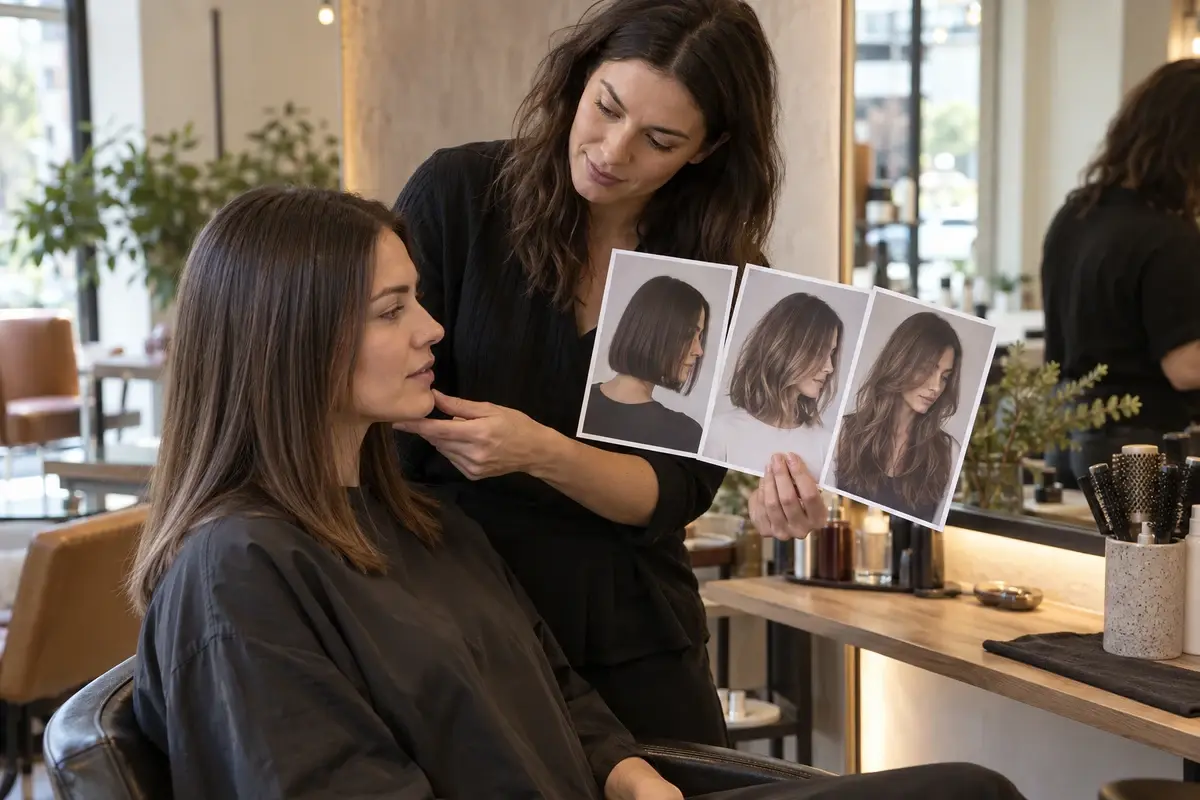
Straight hair makes the outer line, part, and layer spacing easy to see. That visibility can make a precise perimeter look especially deliberate, but it can also reveal uneven ends or layers that do not connect as intended. The useful haircut is the one that works with your density, root direction, routine, and desired amount of movement.
Start with how your straight hair falls
Observe clean, normally dried hair rather than a heavily styled version. Note whether it falls pin-straight or develops small bends, where it separates, whether the ends turn at the shoulders, and how the crown and hairline direct the part.
Straightness does not tell you strand diameter or density. Recent fibre research found measurable variation within low-curvature hair and cautioned against treating visual texture labels as complete biological categories (International Journal of Cosmetic Science). Use the strand-and-density guide to record those traits separately.
Also check condition and normal tool use. The American Academy of Dermatology recommends gentle detangling and limiting high heat because excessive heat can damage hair (AAD). A cut that depends on daily hot-tool shaping may not fit a low-tool routine.
How we ranked the options
This ranking favors haircuts that turn a straighter fall into a clear, adaptable silhouette. The criteria are:
- perimeter clarity and control over visible fullness
- useful movement without requiring a curled finish
- adaptability across strand diameter and density
- compatibility with air-drying and ordinary styling routines
- tie-back, upkeep, and grow-out tradeoffs
- ease of describing the dry shape to a hairstylist
The order is a starting point, not a rule. A hairstylist should adapt the distribution and cutting method after seeing your hair in person.
Comparison at a glance
| Rank | Haircut | Main benefit | Main tradeoff |
|---|---|---|---|
| 1 | Collarbone-length blunt lob | Strong outline with broad styling flexibility | Shoulder contact may turn the ends |
| 2 | Blunt bob | Crisp, compact perimeter | Precision and nape length show grow-out |
| 3 | Long blended layers | Movement while retaining long length | Subtle layers may disappear without styling |
| 4 | Face-framing medium cut | Front movement with a substantial back perimeter | Short front pieces can limit tie-back |
| 5 | Long pixie | Clear short shape with crown flexibility | Root direction and resetting become visible |
| 6 | Lightly layered bob | Softer movement than a solid bob | Too much layering can weaken the edge |
| 7 | Long one-length cut | Maximum continuity and tie-back range | Long-hair handling remains |
1. Collarbone-length blunt lob
Who it suits: Someone who wants a visible change without giving up moderate length, a simple outline, or most tie-back options.
Why it ranks: The shoulder-length lob uses straight hair’s fall to show a strong edge while leaving room to wear the hair smooth, tucked, tied, or softly bent.
Main benefit: It balances perimeter clarity with practical flexibility.
Limitation: Hair meeting the shoulders can turn outward or inward, so the exact dry endpoint matters.
How to adapt it: Choose whether the edge sits just above, on, or below the collarbone and whether the front remains equal or slightly longer.
2. Blunt bob
Who it suits: Someone ready for a shorter, graphic outline and limited tie-back.
Why it ranks: A blunt bob makes the perimeter the central feature rather than relying on waves or layered styling.
Main benefit: The silhouette is easy to read from the front and side.
Limitation: A precise edge and exposed nape can make growth more noticeable.
How to adapt it: Agree on the dry point at the chin, jaw, or neck and check how the hairline and glasses, if worn, interact with the front.
3. Long blended layers
Who it suits: Someone who wants to retain long hair while introducing visible movement.
Why it ranks: Long layers can interrupt a solid sheet of hair without replacing the long outline.
Main benefit: Long styling and tie-back options remain available.
Limitation: Very blended layers may look nearly one-length when air-dried, while short or numerous layers can lighten the lower edge.
How to adapt it: Name the shortest acceptable dry layer and whether movement matters more around the face or throughout the back.
4. Face-framing medium cut
Who it suits: Someone who wants a front-view change while keeping much of the back continuous.
Why it ranks: Face-framing layers can introduce cheek-, jaw-, or collarbone-level movement without requiring all-over layering.
Main benefit: The change is concentrated where it is most visible in conversation and photographs.
Limitation: Short pieces may fall out of a ponytail or need deliberate placement.
How to adapt it: Mark the shortest front point, the side connection, and the minimum length needed to tuck or tie back.
5. Long pixie
Who it suits: Someone who wants a genuinely short haircut with a movable top and fringe area.
Why it ranks: A long pixie gives straight hair direction through the crown and front while keeping the ears and nape compact.
Main benefit: It offers several short styling directions without long-hair handling.
Limitation: Cowlicks, sleep movement, and growth around the ears and nape become more apparent.
How to adapt it: Map root direction and decide which sections should lie smooth, sweep, or remain separated.
6. Lightly layered bob
Who it suits: Someone who likes bob length but wants a softer edge and more movement than a solid cut.
Why it ranks: A layered bob keeps a compact silhouette while relaxing the perimeter.
Main benefit: Light layering can make the bob feel less rigid in an air-dried finish.
Limitation: Excessive short layering can remove the strong lower line that makes a bob recognizable.
How to adapt it: Decide how much edge should remain and where the first visible layer should begin.
7. Long one-length cut
Who it suits: Someone who prioritizes maximum length, a continuous outline, and versatile tying or braiding.
Why it ranks: Sleek one-length hair makes straight fall and a substantial perimeter the whole design.
Main benefit: There are no short internal sections to manage during grow-out.
Limitation: It retains long washing and drying work, and worn ends can be easy to see.
How to adapt it: Choose the back outline, check end condition, and decide whether minimal face framing would improve daily wear.
Choose your straight-hair finalists
| Your priority | Start with | Compare against | Confirm in consultation |
|---|---|---|---|
| Strong medium-length outline | Blunt lob | Blunt bob | Shoulder contact and tie-back |
| Keep long length with movement | Long blended layers | Face-framing medium cut | Shortest layer and perimeter fullness |
| Make a short commitment | Blunt bob | Long pixie | Nape, root direction, and grow-out |
| Soften a compact shape | Lightly layered bob | Blunt bob | Amount of edge to retain |
| Keep maximum continuity | Long one-length cut | Long blended layers | End condition and daily handling |
Reduce the list to two or three options. Use the layer decision guide if your finalists mainly differ by where movement begins, and the reference-photo guide to collect front, side, and back views.
Compare straight-hair silhouettes with Hair Fairy
After the independent shortlist is clear, compare the same portrait in a blunt bob, shoulder-length lob, and long-layered cut. Keep color, expression, and unrelated styling direction constant. Use Custom Style when a reference has the right outline but needs a different length or part.
Reject a result if the face, hairline, texture direction, or requested length changes incorrectly. A preview can communicate a silhouette, but it cannot measure strand diameter or density, inspect the back, predict natural fall, or establish salon feasibility. Review the privacy policy before uploading a portrait.
Direct recommendation
Start with a collarbone-length blunt lob for the broadest balance of a clear straight-hair perimeter, moderate length, and routine flexibility. Choose a blunt bob when the crisp short outline is the priority, long blended layers when retaining length matters most, or a long pixie when you want a deliberate cropped change. Take two finalists and your normal routine to a hairstylist for the final adaptation.
Frequently Asked Questions
Questions about hair type and haircut choices
What haircut is best for straight hair?
A collarbone-length blunt lob is the broadest starting point because it gives straight hair a readable edge while keeping moderate length and flexibility. Density, strand diameter, root direction, routine, and preferred finish should determine the adaptation.
Does straight hair look better blunt or layered?
Neither is universally better. A blunt outline concentrates visual weight at the perimeter, while layers create separation and movement. Choose according to the shape you want and how much lower fullness you want to retain.
Can fine straight hair have layers?
Yes. Restrained face framing or low blended layers can add movement while retaining a substantial perimeter. Fine strand diameter and lower density are different traits, so assess both.
What short haircut works for straight hair?
A blunt bob gives the clearest short outline, while a long pixie creates more separation around the crown, ears, and fringe. The useful choice depends on growth patterns, daily resetting, and grow-out preferences.
Is long one-length hair suitable for straight hair?
Yes. It emphasizes a continuous line and preserves tie-back options, but long length keeps the associated washing, drying, and condition demands and may show uneven ends clearly.
Can an AI preview show how straight hair will fall after a haircut?
No. A preview can compare visible length, outline, and general layer direction, but it cannot measure density, inspect root growth, predict movement, choose cutting technique, or guarantee a salon result.
About This Guide
Diane BennettWomen’s Hairstyle Editor, Hair Fairy
Diane writes and reviews Hair Fairy guides with a focus on realistic haircut decisions, clear salon communication, and styles that work beyond the inspiration photo. Her approach balances visual ideas with texture, maintenance, and everyday wear.
Women’s haircut selection, face-shape and texture considerations, salon-reference planning, maintenance trade-offs, clear stylist communication, and responsible use of AI hairstyle previews as decision aids rather than guarantees.
View author profileSee us more often in Google
One click marks Hair Fairy as a preferred source, so our articles are more likely to appear in your Top Stories, and can show a preferred badge in AI Mode and AI Overviews.
Compare Your Idea
Preview a hairstyle on your own photo.
Use a reference, a written description, or both—then discuss the practical result with your stylist.