
Haircut Decision Guides
8 Best Low-Maintenance Haircuts for Women
Compare eight manageable haircuts by daily styling, salon upkeep, grow-out, texture, and tie-back needs.
 Hair Fairy Editorial8 min read
A collarbone lob is the strongest overall low-maintenance starting point because it can air-dry in many textures, retain tie-back flexibility, and grow without immediately losing its basic outline. Long blended layers and simple one-length cuts may need less frequent reshaping, while shags, bixies, and pixies trade length for more texture or shorter drying time.
Key Takeaways
- Low daily styling and low salon maintenance are different; evaluate both before choosing a cut.
- Texture, density, growth patterns, preferred finish, and tie-back needs can make the same haircut easy for one person and demanding for another.
- Every option has a tradeoff, so choose the maintenance task you mind least rather than expecting a universally effortless cut.
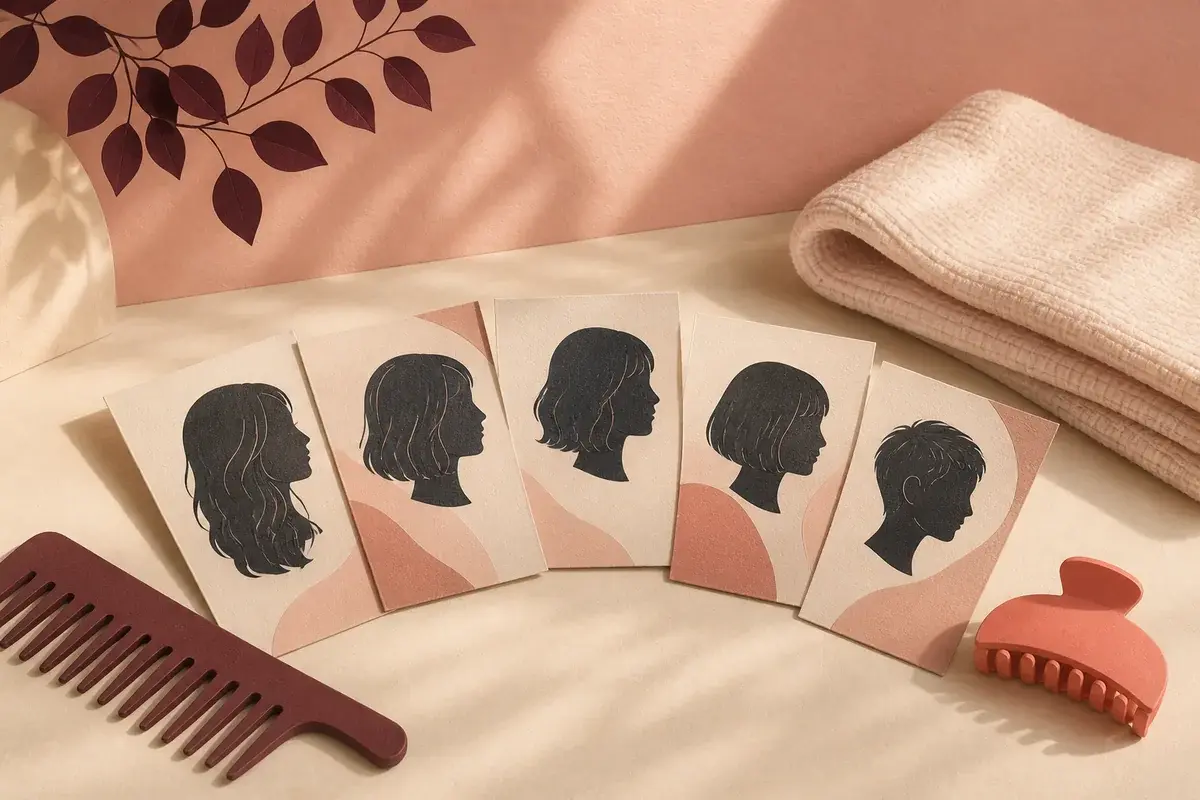
“Low maintenance” is personal. Some people want to minimize morning styling; others want fewer salon visits, an easy grow-out, quick drying, or enough length for a ponytail. Define the task you want to reduce before ranking the haircut. If appointment timing is the main concern, use the haircut scheduling guide to choose a starting interval.
What low maintenance actually means
L’Oréal Paris’s low-maintenance haircut guide and Hair.com’s hair-type roundup both present options across lengths and textures. Their breadth reflects an important point: no haircut has the same routine on every head of hair.
| Maintenance type | What to evaluate |
|---|---|
| Daily styling | Air-dry behavior, parting, refreshing, tool use, and desired finish |
| Wash-day work | Detangling, drying time, curl setting, and product application |
| Salon upkeep | How quickly the perimeter, fringe, or short shape loses its intention |
| Grow-out | Whether layers, bangs, or short sections transition comfortably |
| Practical use | Tie-back ability, work needs, exercise, climate, and sleep routine |
How we ranked the options
We ranked daily styling flexibility, salon-upkeep flexibility, grow-out, texture compatibility, tie-back options, and ease of adaptation. A higher rank means a broader low-maintenance starting point, not less work for every person.
Overview of the eight haircuts
| Rank | Haircut | Daily advantage | Salon or grow-out tradeoff |
|---|---|---|---|
| 1 | Collarbone lob | Flexible air-dry, styling, and tie-back options | Shoulder contact can alter the ends |
| 2 | Long blended layers | Retains length and a gradual shape | Long hair still takes time to wash and dry |
| 3 | One-length bob | Simple, readable outline | Precision may become visible as it grows |
| 4 | Long blunt cut | Minimal layer management and gradual grow-out | Length increases wash and drying work |
| 5 | Soft shag | Natural movement can suit relaxed styling | Fringe and short layers may need refreshing |
| 6 | Curly shag | Texture supplies much of the shape | Shrinkage and layer balance need specialist adaptation |
| 7 | Bixie | Short drying time and flexible texture | Short-to-medium layers change quickly during grow-out |
| 8 | Textured pixie | Compact, quick-to-wash shape | Frequent resetting or reshaping may matter |
1. Collarbone lob
Who it suits: Someone seeking a medium-length cut that can still be tied back and worn in multiple finishes.
Why it ranks: A shoulder-length lob balances length, simple geometry, and practical flexibility.
Main benefit: It works as an air-dried, waved, curly, or smooth shape without requiring one signature finish.
Limitation: The shoulders can push ends outward, and a precise perimeter may need intentional drying.
How to adapt it: Set the length slightly above or below the point where your shoulders interfere, and preserve enough length for your preferred tie-back.
2. Long blended layers
Who it suits: Someone who wants to keep long hair while adding movement without many disconnected short pieces.
Why it ranks: Long layers can grow gradually and preserve styling flexibility.
Main benefit: Blended layers reduce the need for a precision perimeter and can support natural movement.
Limitation: Long hair still requires washing, detangling, drying, and care; layers may need styling to look pronounced.
How to adapt it: Keep the shortest layers long enough for your normal tie-back and explain whether you air-dry or style.
3. One-length bob
Who it suits: Someone who wants a short, simple outline without maintaining many layers.
Why it ranks: A blunt bob can have a straightforward daily shape when it works with the natural texture.
Main benefit: Fewer layer lengths can simplify drying and detangling.
Limitation: A clean perimeter shows grow-out, and some textures need styling to keep the intended line.
How to adapt it: Choose a length where your hair naturally turns or falls well, and soften the edge if strict precision is not your priority.
4. Long blunt cut
Who it suits: Someone who prefers long hair and a simple perimeter over layered movement.
Why it ranks: The grow-out is gradual, and there are fewer short pieces to style or pin back.
Main benefit: It preserves maximum tying and braiding flexibility.
Limitation: Long, dense hair can require substantial wash-day and drying time.
How to adapt it: Select a length that keeps the ends manageable and discuss whether subtle interior shaping is useful for your density.
5. Soft shag
Who it suits: Someone whose natural wave or movement supports a relaxed, layered finish.
Why it ranks: A soft shag can look intentional without a smooth blowout.
Main benefit: Texture and irregular movement are part of the design rather than errors to correct.
Limitation: Short crown layers or fringe can require morning refreshing and change noticeably during grow-out.
How to adapt it: Keep layers longer and the fringe optional when salon upkeep or daily resetting is the main concern.
6. Curly shag
Who it suits: Someone who wants natural waves, curls, or coils to form a layered silhouette.
Why it ranks: The curly shag uses natural texture as the finish instead of depending on straightening.
Main benefit: A well-adapted shape can distribute curl volume and support air-drying or diffusing routines.
Limitation: Shrinkage, pattern variation, density, and fringe behavior make generic references unreliable.
How to adapt it: Discuss dry length and show references with relevant texture; let the stylist choose the cutting approach.
7. Bixie
Who it suits: Someone who wants less length to wash and dry but prefers more softness than a close pixie.
Why it ranks: The bob-pixie midpoint supports tousled texture and several front lengths.
Main benefit: Shorter drying time with more styling variation than a very short cut.
Limitation: The layered outline can move through awkward stages as the nape and sides grow.
How to adapt it: Choose whether the maintenance priority is a neat nape, longer fringe, or relaxed grow-out, because those lead to different shapes.
8. Textured pixie
Who it suits: Someone comfortable with short length who prefers quick washing over long intervals between reshaping.
Why it ranks: A pixie cut removes long-hair drying and detangling tasks.
Main benefit: The compact silhouette can be reset quickly for some textures and finishes.
Limitation: Cowlicks, sleep movement, short sides, and grow-out can create daily or salon work.
How to adapt it: Choose enough top and fringe length to work with your growth patterns and preferred styling method.
Choose your finalists
| Your main maintenance goal | Start with | Compare against |
|---|---|---|
| Preserve tie-back options | Collarbone lob | Long blended layers |
| Reduce layer styling | One-length bob | Long blunt cut |
| Support natural movement | Soft shag | Curly shag |
| Reduce wash and drying length | Bixie | Textured pixie |
| Allow gradual grow-out | Long blended layers | Long blunt cut |
| Minimize salon precision | Softly shaped lob | Long blended layers |
Use the haircut suitability guide to audit your natural hair and routine, and compare fine-hair options when perimeter strength is a priority.
If overall density or strand thickness makes weight distribution the larger concern, use the thick-hair haircut ranking to compare shapes with more deliberate movement.
Compare finalists with Hair Fairy
After ranking your real maintenance needs, compare finalists using the women’s hairstyle directory or Hair Fairy Custom Style. Keep the same portrait and change only length or silhouette first.
A preview can show a visual direction. It cannot measure daily effort, salon frequency, drying time, shrinkage, or grow-out, so confirm those points with your hairstylist.
Direct recommendation
Start with a collarbone lob for the broadest balance of length and flexibility. Choose long layers or a long blunt cut when gradual grow-out matters, a bob when you prefer a simple short outline, or a shag, bixie, or pixie when its texture and shorter length exchange is worth the added reshaping or refreshing.
Frequently Asked Questions
Questions about choosing and maintaining a haircut
What is the lowest-maintenance haircut for women?
A collarbone lob is a versatile starting point because it preserves moderate length and tie-back options, but the easiest cut depends on your natural texture, desired finish, and salon routine.
Does low-maintenance mean I will not need styling?
No. It means the routine fits your preferences and hair behavior. Even an air-dried cut may need detangling, refreshing, or occasional shaping.
Are short haircuts lower maintenance than long hair?
Short hair can dry faster, but a pixie or bixie may need more frequent reshaping and daily resetting. Long hair takes longer to wash and dry but may grow out more gradually.
Which haircut is easiest to tie back?
A collarbone lob, long blended layers, or a long blunt cut generally preserves more tie-back flexibility than a bob, bixie, or pixie.
Are bangs low maintenance?
Bangs can add daily positioning, washing, or trimming needs depending on their length and your growth pattern. Include that work in your maintenance estimate.
Can I preview which low-maintenance haircut will work for me?
You can preview silhouettes and lengths, but an image cannot predict drying time, growth behavior, shrinkage, or how much styling you will prefer in daily life.
About This Guide
Hair Fairy EditorialEditorial team, Hair Fairy
Hair Fairy Editorial writes and reviews Hair Fairy guides with a focus on realistic haircut decisions, clear salon communication, and styles that work beyond the inspiration photo. The team balances visual ideas with texture, maintenance, and everyday wear.
Women’s haircut selection, face-shape and texture considerations, salon-reference planning, maintenance trade-offs, clear stylist communication, and responsible use of AI hairstyle previews as decision aids rather than guarantees.
View author profileSee us more often in Google
One click marks Hair Fairy as a preferred source, so our articles are more likely to appear in your Top Stories, and can show a preferred badge in AI Mode and AI Overviews.
Compare Your Idea
Preview a hairstyle on your own photo.
Use a reference, a written description, or both—then discuss the practical result with your stylist.