
Haircut Decision Guides
How to Choose a Haircut That Still Fits a Ponytail: 4 Checks
Keep the tie-back function you need by checking ponytail height, front layers, dry length, movement, and the salon plan before cutting.
 Hair Fairy Editorial7 min read
Choose a haircut that still fits a ponytail by defining where you secure it, checking which front and nape sections must reach that point, testing the requirement in your normal dry texture, and agreeing a length margin with your stylist. A longer lob or medium cut can be a starting point, but no universal shoulder-length measurement guarantees every section will stay in your preferred ponytail.
Key Takeaways
- A low ponytail and a high ponytail require different sections to travel different distances.
- Check the shortest face-framing layers and nape pieces, not only the longest back length.
- Keep a comfortable length margin rather than relying on a tighter tie to hold short sections.
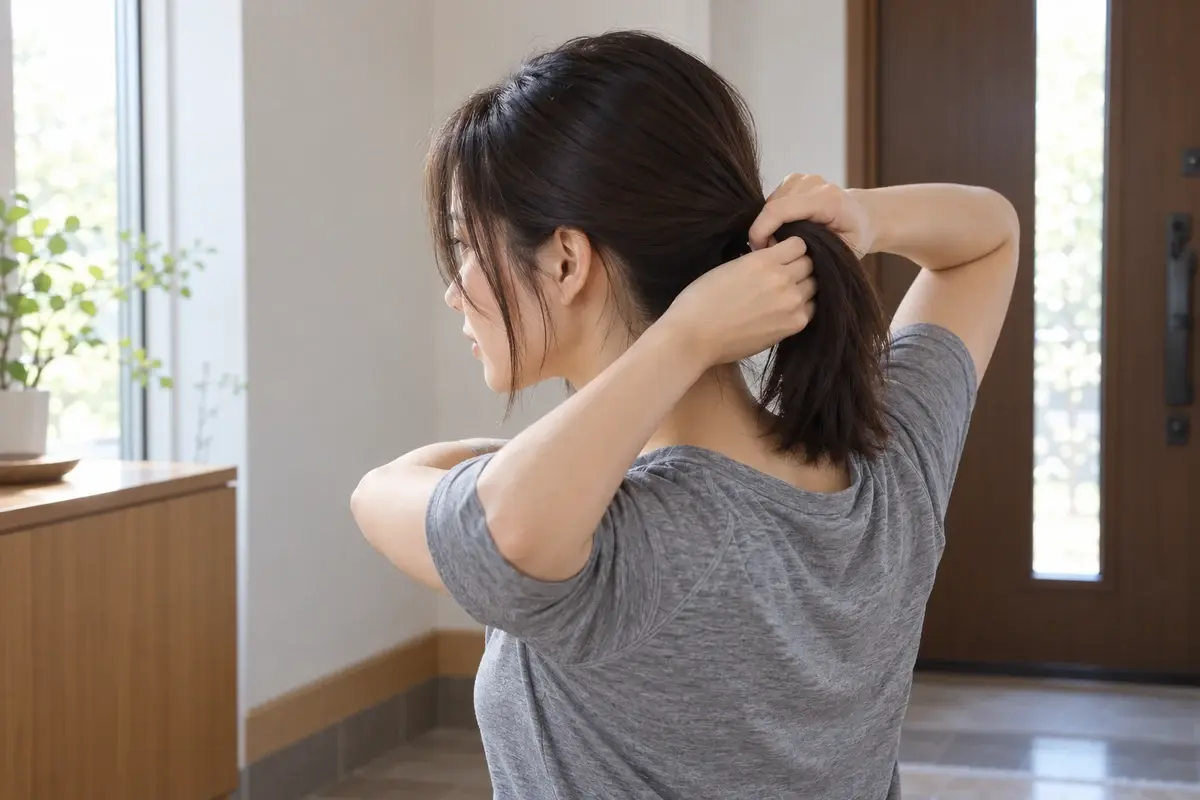
“Keep enough for a ponytail” is a useful requirement only when you show what you mean. A loose tie at the nape, a high exercise ponytail, and a bun for work are different tasks. This guide turns that requirement into a check your stylist can use before removing length.
Start with the broader haircut suitability guide if you are balancing several goals. Here the priority is specific: retaining the tie-back function that your day depends on.
Step 1: Define your actual tie-back requirement
Wear the ponytail you use most and photograph it from the side and back. Record the tie position, whether the front stays secured, and whether you use pins. Also name the situation: running, cooking, work, or simply moving the hair off your face.
Separate a nonnegotiable requirement from a preference. “Every section stays back without clips during work” is stricter than “I can loosely gather most of it at home.” If you need a bun as well, include that separately; reaching the tie point does not prove there is enough remaining length to wrap a bun.
| Tie-back requirement | Sections to check first | Possible compromise | What to show the stylist |
|---|---|---|---|
| Low ponytail | Front and sides reaching toward the nape | A small clip for the front | Exact low tie position |
| High ponytail | Nape and lower sides reaching upward | Lower tie height | Usual exercise ponytail |
| All hair secured | Shortest layers, bangs, and hairline sections | Longer framing instead of a short fringe | Which loose pieces are unacceptable |
| Loose half-up style | Upper sides and front | Lower sections remain down | The portion you need gathered |
The output is one sentence describing the function, not just a haircut label.
Step 2: Find the shortest sections that must reach
Let the hair down and identify the shortest front framing, side layers, and lower nape pieces. Gather them gently toward your chosen point. Note which already need a pin or more tension than feels comfortable. Do not pull hard to make the test pass.
A shoulder-length lob or medium cut is a visual starting point, not a tie-back guarantee. A long back perimeter can coexist with short front layers that escape. Conversely, you might accept a shorter outline if a low tie and clips meet your actual need.
If you want face-framing layers, use the layer-selection guide to decide their starting point. Ask the stylist to demonstrate where those shortest proposed pieces would travel before agreeing to them.
Step 3: Check dry texture, movement, and comfort
Repeat the gathering check in the texture you normally wear. Do not use straightened hair as the only evidence if you usually wear curls. Note shrinkage, slipping sections, and what happens when you turn your head or look down. Use an ordinary comfortable tie rather than a tighter one that disguises the problem.
This is a practical observation, not proof of how a proposed shorter cut will behave. Your stylist should estimate the margin using your actual hair. If tie-back is essential, favor more retained length when the outcome is uncertain.
The American Academy of Dermatology warns that repeated pulling from tight hairstyles can cause traction alopecia. Do not solve a reach problem by increasing tension. Change a painful style immediately, and seek dermatologic advice for a receding hairline, patchiness, or persistent scalp symptoms.
Step 4: Confirm a tie-back plan before cutting
Show the tie point in person. Ask your stylist to check the proposed dry perimeter, shortest layer, and front framing against it. Explain whether you accept loose pieces, pins, or a lower ponytail. If the style cannot keep the function, choose more length or change the haircut detail.
Compare two plans: your preferred shorter cut with retained front length, and a longer fallback. The bob-selection guide helps separate perimeter length from layers and angle. Bring a side and back reference rather than relying on a polished front view.
Confirm the tradeoff aloud: “I prefer a slightly longer outline over losing my clipless low ponytail.” Your stylist can adapt the technique; your job is to state the outcome that matters.
Your ponytail-preservation salon brief
I need a [low / high] ponytail for [activity]. [All sections / these sections] must stay back with [no clips / these clips]. I normally wear my hair [dry texture and method]. Keep the shortest front layers and nape long enough for that function with a margin you can explain. If the shorter outline conflicts with this, use [longer fallback].
- I showed the exact tie point.
- I named the sections that must remain secured.
- I checked my usual dry texture.
- I stated whether pins, bangs, and loose pieces are acceptable.
- I confirmed a longer fallback before cutting.
Common ponytail haircut mistakes
Checking only the longest section. The shortest required piece often decides whether the ponytail works.
Using “shoulder length” as a guarantee. A landmark does not specify layers, tie height, shrinkage, or a comfort margin.
Forgetting the front when adding layers. Movement around the face can mean more escaped pieces. Make that exchange deliberate.
Testing only while standing still. Your real requirement may include bending or exercise. Show the context rather than assuming a salon mirror check covers it.
Relying on tighter ties. Keep comfort part of the requirement. More tension is not a substitute for sufficient length.
Compare the loose haircut with Hair Fairy
After defining the function, use Hair Fairy Custom Style to compare two loose-hair directions on the same portrait: a longer lob with long front framing and a medium cut with a more substantial perimeter. Keep hair color, texture direction, and part constant. Follow the controlled comparison guide if you need a repeatable shortlist.
Reject previews with altered facial features, implausible hairlines, or missing sections. They can help you choose the loose silhouette, but cannot test whether a ponytail holds, predict shrinkage, or guarantee a salon result. Bring the finalists alongside your actual tie-back photos to the stylist. Read the privacy policy before uploading.
Decision summary
Define the ponytail you need, check the shortest required sections, observe your usual dry texture, and agree a comfortable margin before cutting. Choose more retained length when the tie-back function matters more than the shortest possible outline. A practical fallback is better than discovering the missing length after the appointment.
Frequently Asked Questions
Questions about choosing and maintaining a haircut
What is the shortest haircut that can fit a ponytail?
There is no single length for everyone. It depends on head proportions, the tie position, texture, shrinkage, layers, and whether you accept clips or loose front sections. Test the exact function with your stylist.
Can a lob still go into a ponytail?
Some lobs can gather into a low ponytail, but shorter fronts or nape sections may fall out. Ask for the shortest dry sections to reach your chosen tie point with a comfortable margin.
Can I have face-framing layers and still tie my hair back?
Yes, if the layers remain long enough for your required tie point, or you knowingly accept a clip or loose pieces. Name which front sections must stay secured before the layers are cut.
Does curly hair need a different ponytail length check?
Check the hair in the dry texture you usually wear. A stretched section reaching the tie point does not establish that it will stay there in its normal curl pattern.
Should I tighten my ponytail if short pieces fall out?
Do not use extra tension as the solution. A comfortable tie, different position, clip, or more retained length is a better discussion. Pain or scalp symptoms mean the hairstyle needs changing.
Can Hair Fairy verify whether a haircut ties back?
No. It can compare visible length and framing directions, but a generated image cannot test reach, grip, movement, shrinkage, or comfortable tension.
About This Guide
Hair Fairy EditorialEditorial team, Hair Fairy
Hair Fairy Editorial writes and reviews Hair Fairy guides with a focus on realistic haircut decisions, clear salon communication, and styles that work beyond the inspiration photo. The team balances visual ideas with texture, maintenance, and everyday wear.
Women’s haircut selection, face-shape and texture considerations, salon-reference planning, maintenance trade-offs, clear stylist communication, and responsible use of AI hairstyle previews as decision aids rather than guarantees.
View author profileSee us more often in Google
One click marks Hair Fairy as a preferred source, so our articles are more likely to appear in your Top Stories, and can show a preferred badge in AI Mode and AI Overviews.
Compare Your Idea
Preview a hairstyle on your own photo.
Use a reference, a written description, or both—then discuss the practical result with your stylist.