
Haircut Decision Guides
How to Grow Out Layers: 4 Steps Toward a Fuller Perimeter
Grow out unwanted layers by mapping their dry endpoints, choosing a length tradeoff, agreeing selective trims, and tracking a fuller-looking perimeter.
Grow out layers by identifying which shorter sections need length, choosing whether to preserve the longest ends or shorten the perimeter, agreeing a selective trim plan, and reviewing progress in your usual dry texture. Layers do not automatically catch up while every section grows; a less layered outline requires narrowing the visible length gap through a planned balance of growth and cutting.
Key Takeaways
- Separate growing longer from growing toward fewer layers; those goals can require different trimming decisions.
- Protect the short sections you want to reach the outline, and agree how much longest length you are willing to remove.
- Use dry front, side, and back photos to review the perimeter rather than repeatedly recutting the original layers.
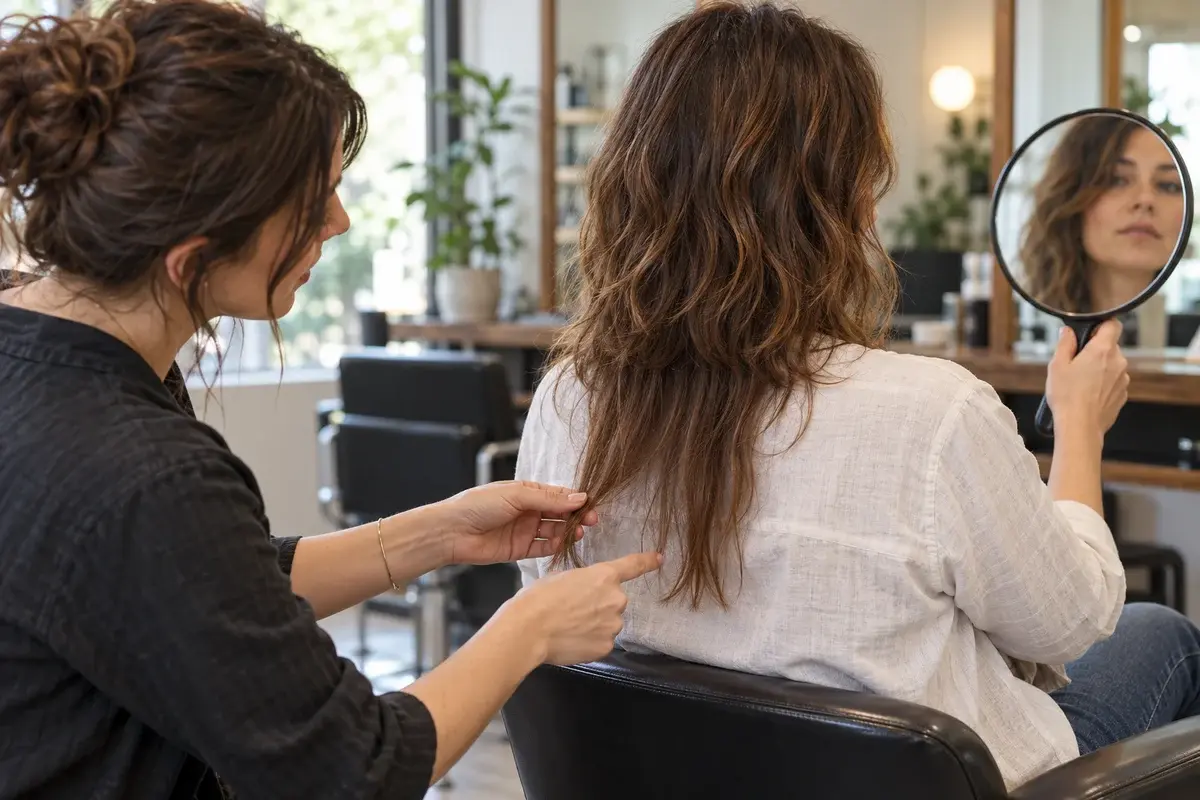
Growing out layers is a shape transition, not simply a wait for longer hair. You may like your overall length but dislike the separated ends, or want to stop maintaining a shag without immediately cutting a bob. This guide focuses on removing unwanted layer separation; the layer-selection guide helps if you still want layers but need a different arrangement.
Step 1: Map the layers you want to keep growing
Look at your hair after your normal drying routine, with your head upright and the hair resting naturally. Take a front, side, and back photo. Identify the shortest area that interrupts the outline you want: face framing, crown layers, side pieces, or a shelf across the back. Also identify any layers you still enjoy. You do not have to remove every length difference to reach a satisfactory shape.
Pivot Point's explanation of haircut structure distinguishes length arrangements used for one-length and layered forms. The useful implication for this decision is that a longer layered cut and a less layered cut are different targets. Simply gaining length does not necessarily change the arrangement you dislike.
Describe the problem visibly: “The top layer ends near my shoulders while the bottom looks sparse below it” is more useful than “my layers are bad.” A thin-looking edge is not proof of low density or hair loss. If you notice sudden shedding, patchiness, or scalp symptoms, consult a dermatologist rather than treating the change as a cutting problem.
For curls, photograph the usual dry pattern without pulling pieces down. An uneven-looking dry endpoint may reflect both the cut and different curl behavior; let a stylist separate those inputs.
Output: three photos and a marked section that needs length, plus any movement you want to retain.
Step 2: Choose between keeping length and closing the gap
Decide which matters more now: keeping the longest ends, creating a more continuous perimeter, or making a moderate exchange between the two. If two sections grow by similar amounts, their original gap remains. Shortening the longest ends can narrow that gap, but it also changes your overall length.
| Transition route | Best reason to consider it | What you accept | Question for the stylist |
|---|---|---|---|
| Preserve most of the longest length | Overall length is your priority | Layer separation remains visible longer | What can stay untouched while the shorter pieces gain length? |
| Shorten the perimeter in stages | You want gradual visual consolidation | Some longest length is removed at selected visits | Which perimeter adjustment would improve the next stage? |
| Choose a shorter interim outline | You already want a shorter haircut | A larger immediate change, with some layers possibly remaining | Where would the remaining shortest pieces land? |
A shoulder-length lob can be a useful intermediate reference if its dry length appeals to you. It is not a required stage. If the shortest layer sits high above it, a lob will not instantly become one length. Check the bob decision guide before choosing a shorter outline solely to end the transition.
Mark the shortest overall endpoint you would accept on your own hair. Also state practical limits: a low ponytail, ear tuck, or the ability to leave the hair down without daily tool work. Do not sacrifice those limits just because a reference looks more finished.
Output: one transition route and a minimum acceptable dry perimeter.
Step 3: Agree a selective trim plan
Show the section map before asking for a trim. Divide the plan into shorter pieces that need length, longer ends that may be adjusted, and areas needing a professional condition assessment. A routine appointment should not silently recreate the layers you are trying to leave behind.
Ask the stylist to demonstrate the proposed removal before cutting. “Keep the crown layers growing; show me how much of the lower edge you recommend removing” defines the goal without prescribing a technique. If the stylist recommends blending a visible shelf, ask what that would shorten and what would remain afterward.
Trims do not accelerate root growth. The American Academy of Dermatology explains that cutting does not affect growth below the skin. A trim can address ends or shape; it cannot make the shorter layers biologically catch up faster.
If the ends are breaking or tangling, discuss their condition separately from the desired silhouette. The AAD's damage-prevention guidance recommends gentle detangling and reducing damaging handling. A grow-out plan still needs a tolerable care routine; preserving every last end is not the same as retaining useful length.
Output: a written preserve/adjust agreement with the amount of perimeter removal shown on your hair.
Step 4: Review the outline at useful milestones
Repeat the photos with the same part, drying method, and head position when the shape changes enough to reassess. Look for practical milestones: a side piece now reaches an ear tuck, the back shelf looks less distinct, or the lower edge looks substantial enough at a shorter endpoint.
Avoid judging progress from a fresh blowout one week and air-dried curls the next. Those photos answer different questions. If you wear both finishes, maintain a separate comparison set for each.
At the next appointment, ask whether the original route still serves you. You may prefer the new longer layers and stop the transition. Alternatively, you may accept a little more perimeter removal after seeing the intermediate shape. Use the haircut scheduling guide to discuss shape and condition rather than using an automatic full-layer refresh.
Output: continue the route, adjust the allowed perimeter removal, or keep the current layers intentionally.
Your layer grow-out brief
TARGET: I want [a fuller lower outline / less separation at the back / fewer short side pieces].
KEEP GROWING: These [crown / side / front] sections need length.
LENGTH BOUNDARY: My shortest acceptable dry perimeter is [point on my body].
ALLOWED ADJUSTMENT: Show me any proposed removal from [specific area] first.
ROUTINE: I usually [air-dry / diffuse / blow-dry] and need [tuck / tie-back / loose-wear function].
REVIEW: Reassess when [visible milestone] changes.
Common layer grow-out mistakes
Trimming every section by the same amount. That may maintain the existing arrangement rather than narrow the gap you dislike.
Asking to blend without discussing removal. A smoother connection can still require shortening pieces that need length. Confirm the exchange.
Cutting everything to the highest layer immediately. First see what that endpoint means on your head and whether you want that haircut.
Calling every short piece a layer. Ask a stylist to assess whether it belongs to the cut, new growth, or breakage before deciding what to change.
Using a deadline as the only progress measure. Choose a functional milestone and a visible outline instead of assuming every section will reach a fixed target on schedule.
Compare interim outlines with Hair Fairy
After selecting your route, use Hair Fairy Custom Style with a description, reference photo, or both to compare your current overall length with a somewhat shorter, fuller-looking outline. Keep the portrait, color, part, and texture direction constant. The controlled comparison guide explains how to isolate the change.
Reject a result that changes your face, invents substantially denser hair, erases curls, or ignores your length boundary. A preview communicates a preferred outline; it cannot measure your layers, simulate growth, determine cutting technique, or guarantee a salon result. Review the privacy policy before uploading a portrait and bring real front, side, and back photos to the consultation.
Decision summary
Choose whether length or a more continuous perimeter comes first. Protect the shorter sections that serve that target, approve specific adjustments to the longer edge, and review the dry outline before repeating a cut. Finish the transition when the shape and function meet your goal, even if you retain a few intentional layers.
Frequently Asked Questions
Questions about choosing and maintaining a haircut
How long does it take to grow out layers?
There is no single timeline. The starting gap, desired perimeter, growth, breakage, curl behavior, and amount removed at appointments all matter. Ask for milestones based on your current sections rather than a completion date copied from someone else.
Will layers eventually catch up if I stop cutting my hair?
Not necessarily. If shorter and longer sections gain similar amounts of length, the gap remains. You may become comfortable with longer layers, but reaching a more continuous outline usually involves some perimeter shortening as well as growth.
Should I get a blunt bob to remove layers?
Only if the shorter dry length is an outcome you want. A bob may remove some longer ends, but upper layers can still sit above its outline. Have a stylist show what would remain before approving a large length change.
Can a stylist blend layers without making them shorter?
Blending can involve removing hair. Ask which pieces would be cut and whether the adjustment supports your target. You can also ask about styling the transition without changing the sections that need length.
How do I grow out layers in curly hair?
Compare the dry outline in your usual curl pattern and show the stylist where layers end without stretching them. Different curl behavior can change the visible gap. Aim for a preferred silhouette rather than equal stretched lengths throughout.
Can an AI preview show when my layers will be gone?
No. It can illustrate a fuller perimeter or a shorter interim outline, but it cannot forecast growth, measure the remaining gap, or confirm how your hair will settle. Use current hair photos for progress checks.
About This Guide
Diane BennettBlog author, Hair Fairy
Diane Bennett writes Hair Fairy guides about haircut decisions, everyday hair routines, and preparing clear questions for a hairstylist.
Haircut comparison, salon planning, and responsible use of visual hairstyle previews.
View author profileSee us more often in Google
One click marks Hair Fairy as a preferred source, so our articles are more likely to appear in your Top Stories, and can show a preferred badge in AI Mode and AI Overviews.
Compare Your Idea
Preview a hairstyle on your own photo.
Use a reference, a written description, or both—then discuss the practical result with your stylist.