
Haircut Decision Guides
How to Know if Short Hair Will Suit You: 4 Checks
Decide whether a pixie, bob, lob, or longer cut fits your goals by checking motivation, hair behavior, upkeep, grow-out, and visual comparisons.
 Hair Fairy Editorial8 min read
Short hair can suit you when the length supports the change you want, works with your natural hair behavior and real routine, and feels worth its upkeep and grow-out commitment. Compare a pixie, bob, and lob rather than relying on face shape or the 2.25-inch rule, then take your preferred length range to a hairstylist for adaptation.
Key Takeaways
- Face shape and the 2.25-inch measurement are not scientific verdicts; use them, if at all, only as prompts for comparing different silhouettes.
- A pixie, bob, and lob create different face exposure, tie-back options, styling work, salon upkeep, and grow-out paths.
- Preview several short lengths with the same portrait, then confirm texture, density, growth patterns, dry length, and maintenance with a hairstylist.
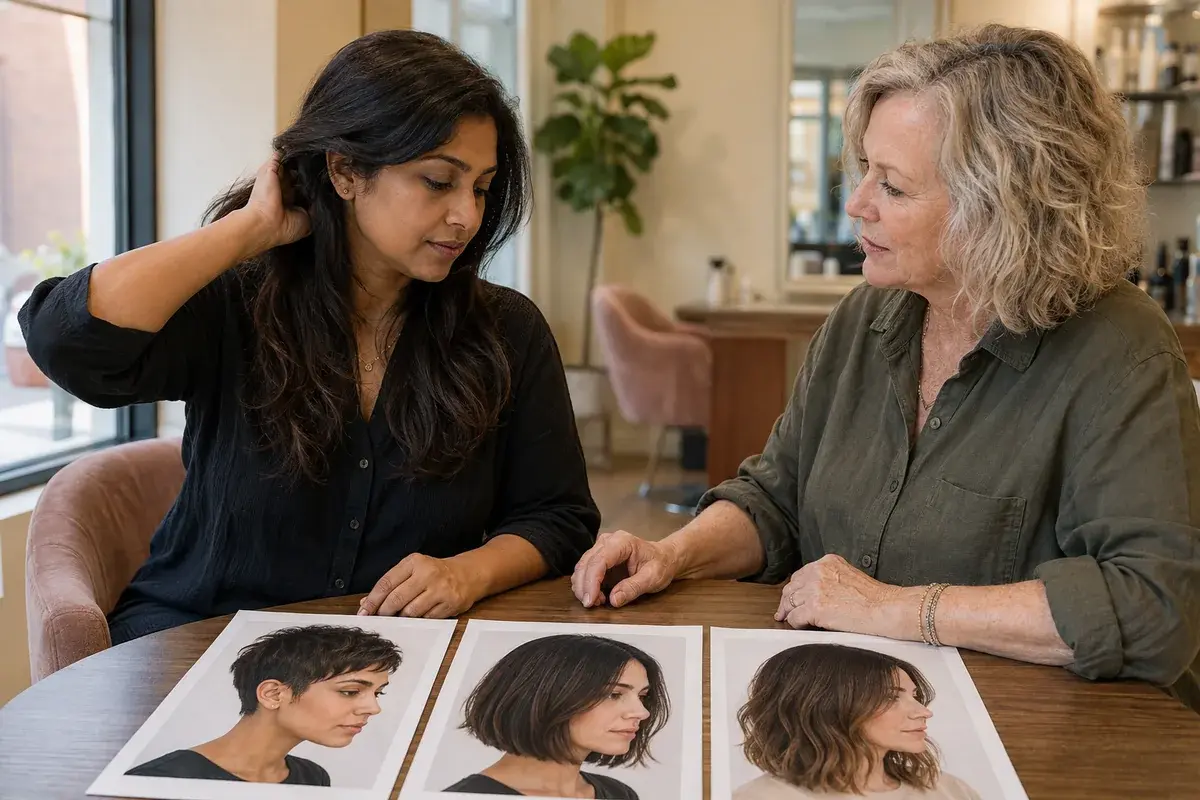
“Will short hair suit me?” is not a yes-or-no measurement question. Short hair includes many lengths and silhouettes, from a close pixie to a collarbone lob. The decision becomes clearer when you define the change, compare the practical consequences, and identify the range you want a hairstylist to adapt.
Step 1: Name the change you actually want
Start with the reason you are considering short hair. Are you moving toward a specific outline, more face exposure, less long-hair handling, visible texture, a stronger perimeter, or a major personal change? A positive, concrete goal is easier to evaluate than a general urge to remove length.
Write one sentence:
I want shorter hair because I want [visible result or practical change], and I am comfortable giving up [length-dependent option].
Then define what “short” means to you. One person may mean collarbone length; another may mean a jaw-length bob or hair above the ears. Browse the women’s hairstyle directory and save examples from at least two length families.
Face shape can help describe emphasis, but it does not grant or deny permission to wear short hair. The popular 2.25-inch pencil test claims that one ear-to-chin measurement predicts short-hair suitability. The current Right Hairstyles short-hair guide uses that test while also acknowledging other factors. Haircut design contains far more variables than one distance, so Hair Fairy does not treat the test as scientific or decisive. If you want to try it anyway, the 2.25 rule calculator shows what the test says for your measurement and where it falls short.
Use the face-shape guide only to describe features you want to reveal, frame, or balance—not to eliminate lengths automatically.
Step 2: Match the length to your hair and routine
Short hair changes how natural texture, density, growth patterns, and styling habits appear. Removing length may release wave or curl, expose cowlicks, concentrate volume in a new place, or reduce tie-back options. Those are adaptation questions, not reasons that a hair type cannot go short.
Audit:
- natural pattern after your normal drying method
- strand diameter and overall density
- shrinkage and pattern variation
- cowlicks, strong parting, hairline, crown, and nape behavior
- whether you air-dry, diffuse, blow-dry, or use other tools
- work, exercise, sleep, climate, and headwear needs
- your minimum acceptable tie-back or tucking ability
Use the haircut suitability guide for the full audit. If your hair is curly or coily, the curly-hair haircut ranking compares rounded, shag, lob, bob, pixie, and bang directions without rigid curl rules.
Step 3: Accept the upkeep and grow-out
Shorter hair can reduce washing, drying, and detangling length, but the outline may change more visibly as it grows. A precise bob perimeter, cropped nape, exposed side, or short fringe creates a different maintenance pattern from long blended layers.
Think through two plans:
- Maintenance plan: Which parts of the silhouette matter enough to reassess as they grow?
- Exit plan: If you decide to grow it, which intermediate shapes would you be comfortable wearing?
Modern Salon’s pixie grow-out guidance describes a staged path that gains length through the top and front while managing the nape toward a bob. That is one professional example, not a universal schedule. Your texture, current shape, goals, and stylist determine the useful approach.
Compare daily work and salon work separately in the low-maintenance haircut guide. Shorter drying time does not automatically mean lower total maintenance.
Step 4: Preview a range and prepare the consultation
Compare at least three lengths rather than testing one dramatic crop in isolation:
- a lob near the shoulders or collarbone
- a bob around the jaw or neck
- a pixie around or above the ears
Keep the source portrait, texture direction, color, expression, and lighting constant. The controlled hairstyle-comparison guide explains how to vary one feature, reject invalid previews, and score finalists.
Choose two finalists and prepare the four-part hairstylist brief. Include your preferred dry endpoint, the shortest acceptable section, details to preserve, normal routine, and what you need to know about growth patterns or upkeep. Let the hairstylist recommend the cutting method.
Pixie vs. bob vs. lob
| Decision factor | Pixie | Bob | Lob |
|---|---|---|---|
| Typical visible length | Around or above the ears, with variable top and fringe | Jaw to upper neck | Near shoulders or collarbone |
| Face and neck exposure | Highest | Moderate to high | Moderate |
| Tie-back potential | Usually minimal | Limited and length-dependent | Often possible, depending on front layers |
| Daily routine | Quick washing, but texture and sleep movement may need resetting | Depends on perimeter, texture, and desired finish | Broadest range of air-dry, styled, and tie-back options |
| Salon sensitivity | Short sides, nape, and outline change visibly | Perimeter and nape shape become noticeable | Shape often transitions more gradually |
| Grow-out path | Several changing short proportions before a bob | Can progress toward a lob | Closest bridge back to longer hair |
| Best starting question | Do I want a genuinely cropped identity? | Where should the dry perimeter sit? | Is this short enough to create the change I want? |
Try the exact pixie cut, blunt bob, and shoulder-length lob pages to make the comparison concrete.
Short-hair decision checklist
- I can name the visual or practical change I want.
- I defined “short” with a dry endpoint, not a vague label.
- I compared a pixie, bob, and lob rather than one image.
- I considered texture, density, shrinkage, and growth patterns.
- I described my real styling and tie-back routine.
- I understand that daily effort and salon upkeep are different.
- I considered a grow-out path, not only the first-day result.
- I have two or three real-hair references with useful angles.
- I prepared questions for a hairstylist instead of relying on a formula.
Common short-hair decision mistakes
Treating the 2.25-inch rule as permission
One facial measurement cannot evaluate the many pixie, bob, and lob variations or your hair and preferences.
Choosing by face shape alone
Face shape is only one descriptive input. Texture, density, routine, desired emphasis, and commitment change the decision.
Assuming short means no styling
Some short cuts dry quickly but show cowlicks, sleep movement, or perimeter changes more readily.
Ignoring the dry length
Wet, stretched, curled, and styled hair can appear at different endpoints. Confirm the intended dry silhouette.
Previewing only the most dramatic option
Without a lob and bob comparison, you cannot tell whether you want cropped hair or simply less length.
Forgetting the grow-out path
The haircut continues after the first appointment. Decide whether the intermediate proportions are acceptable and how you will reassess them.
Compare short lengths with Hair Fairy
After completing the independent checks, compare the pixie, bob, and lob through Hair Fairy while keeping the same portrait and color. Use Custom Style when you have a reference or need to describe an adaptation such as a longer fringe, softer perimeter, or preserved curl texture.
A preview helps communicate visual direction. It cannot determine whether short hair objectively suits you, measure hair behavior, show every angle, or guarantee a salon result. Review the privacy policy before uploading a portrait.
Decision summary
Short hair is a range, not a verdict. Define the change you want, audit your natural hair and actual routine, accept the maintenance and grow-out exchange, and compare a pixie, bob, and lob under consistent conditions. Take two preferred directions to a hairstylist and choose the adaptable plan whose tradeoffs you genuinely want.
Frequently Asked Questions
Questions about choosing and maintaining a haircut
Does face shape determine whether short hair will suit me?
No. Face shape can help you describe where you prefer length or volume, but texture, density, growth patterns, routine, desired effect, and personal taste are equally relevant.
Is the 2.25-inch rule scientifically proven?
No. It is a popular measurement that claims to sort people into short- or long-hair groups, but it does not account for hairstyle variation, hair behavior, routine, preference, or professional adaptation.
Is short hair lower maintenance than long hair?
Not automatically. Short hair may take less time to wash and dry, while precise perimeters, fringes, cowlicks, and short sides can require more daily resetting or salon reshaping.
Can curly or coily hair work in a short haircut?
Yes. Curly bobs and pixies can create distinct short silhouettes. Plan the dry length, shrinkage, density, curl variation, nape, and preferred volume with a hairstylist.
What should I consider about growing out short hair?
Consider whether you are comfortable with changing proportions around the nape, ears, sides, and fringe, and whether you want planned reshaping while the top and front gain length.
Can I test short hair virtually before cutting it?
Yes. Compare several lengths on the same portrait and use the previews as discussion references. They cannot predict natural hair behavior, maintenance, feasibility, or the final salon result.
About This Guide
Hair Fairy EditorialEditorial team, Hair Fairy
Hair Fairy Editorial writes and reviews Hair Fairy guides with a focus on realistic haircut decisions, clear salon communication, and styles that work beyond the inspiration photo. The team balances visual ideas with texture, maintenance, and everyday wear.
Women’s haircut selection, face-shape and texture considerations, salon-reference planning, maintenance trade-offs, clear stylist communication, and responsible use of AI hairstyle previews as decision aids rather than guarantees.
View author profileSee us more often in Google
One click marks Hair Fairy as a preferred source, so our articles are more likely to appear in your Top Stories, and can show a preferred badge in AI Mode and AI Overviews.
Compare Your Idea
Preview a hairstyle on your own photo.
Use a reference, a written description, or both—then discuss the practical result with your stylist.